Castle Peak Power Station: sealing cooling-water culverts
Five years of diving work inside the cooling-water culverts of Castle Peak Power Station: sealing leaking joints with stainless plates, clearing intake screens and repairing a joint on the seabed within a 24-hour shutdown.
- Year
- 2007 – 2012
- Client
- CLP Power Hong Kong
- Location
- Castle Peak Power Station, Tuen Mun
- Status
- Completed
- Category
- Underwater & marine
A power station draws seawater in through large culverts and sends it back out to sea. When the joints between culvert sections start to leak, the only way to reach them is from inside, by divers, while the station keeps to a strict outage window.
Sealing the joints (2007–2011)
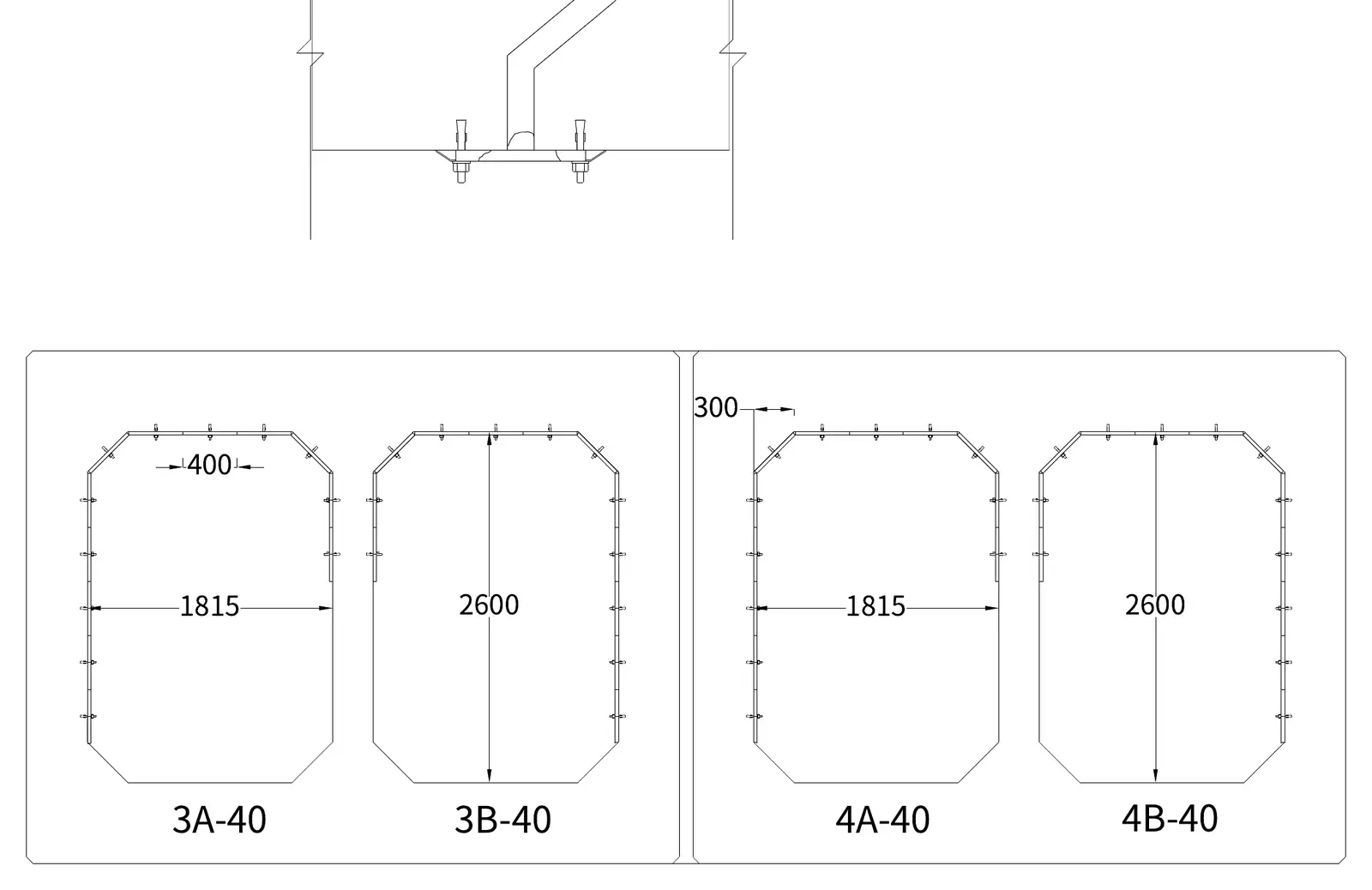
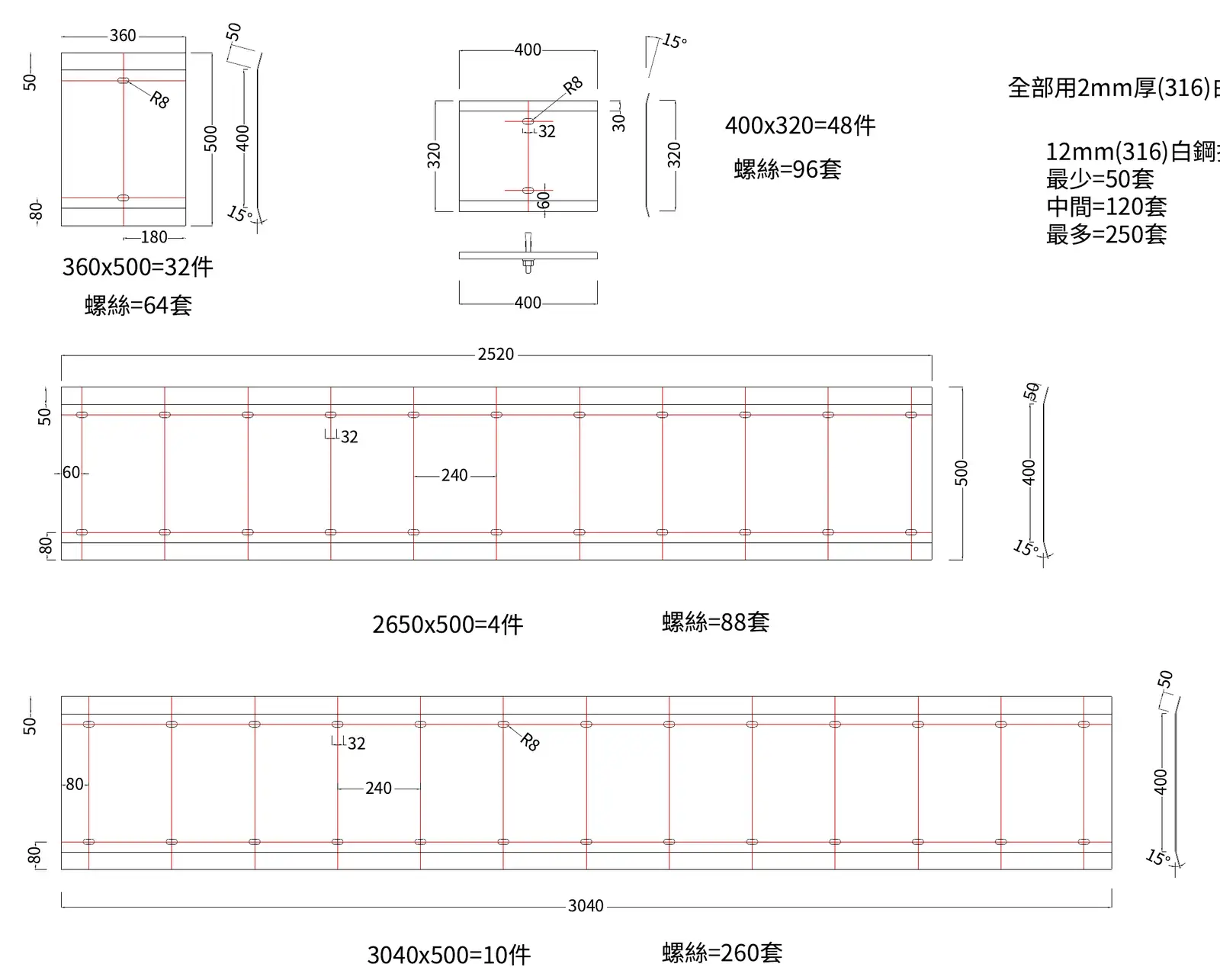
We sealed leaking joints in the twin A and B culverts, joint by joint along C1 to C4. Each joint was covered with 2 mm grade 316 stainless steel plates, cut to 3,040 × 500, 2,650 × 500 and 360 × 500 mm, over a 20 mm rubber sheet and fixed with 12 mm stainless anchors, between 50 and 250 sets per joint. Where a roof plate needed more strength we welded 10 mm stainless plate.
Two dive teams worked at once, each with its own control room, and a decompression chamber and a 25-tonne crane with a man-cage stood by on site. Some shifts ran overnight on the second and third days of Chinese New Year 2010, when the units could be taken out of service.
Clearing the intakes
Divers also lifted the 900 × 900 mm stainless covers of the intake heads, cleared plastic bags and debris from the "bird-cage" screens with water jets, tested and refitted the chlorine dosing pipes, and ran CCTV along the culvert joints before and after.
A leak on the seabed (2010–2012)
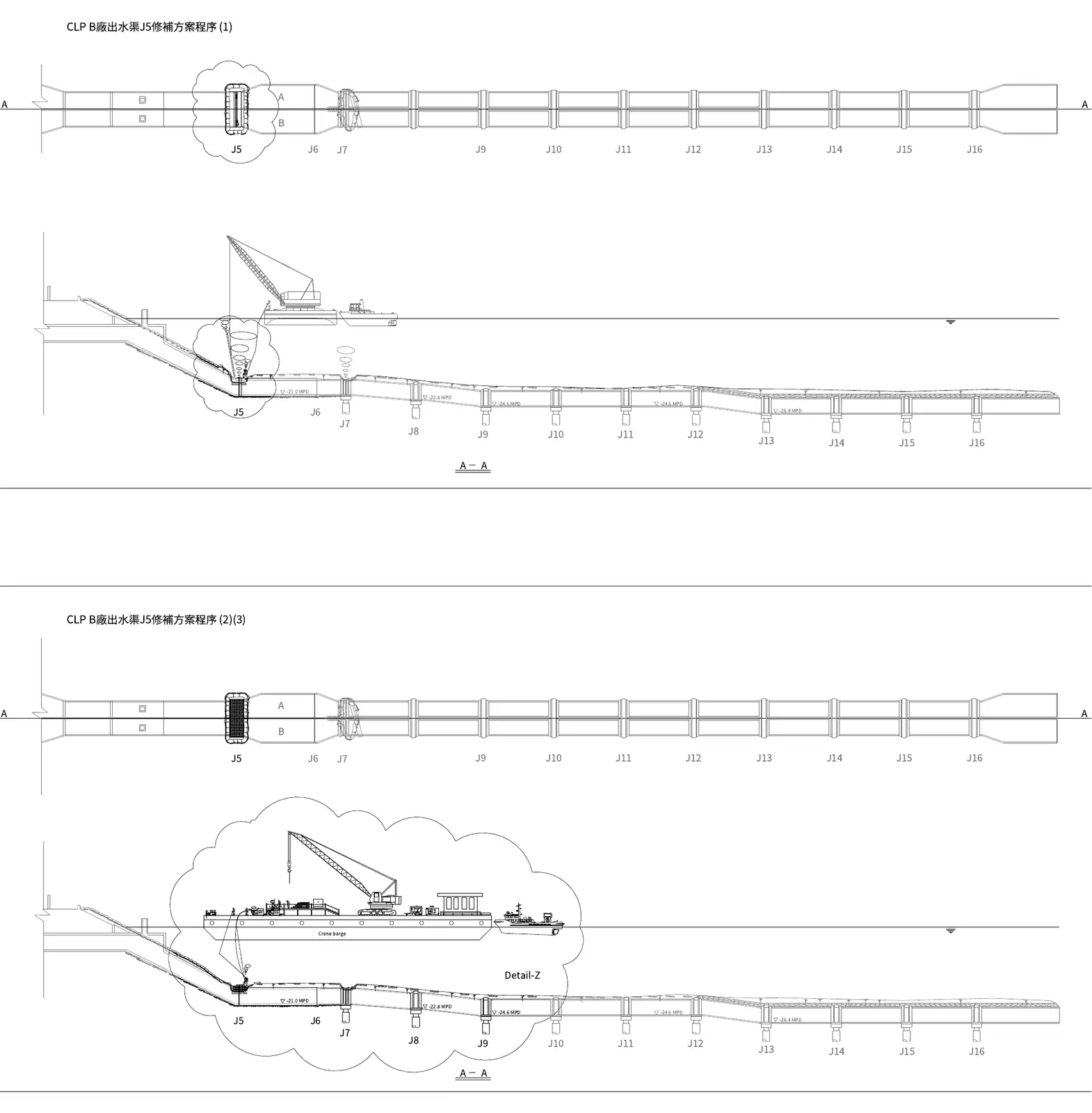
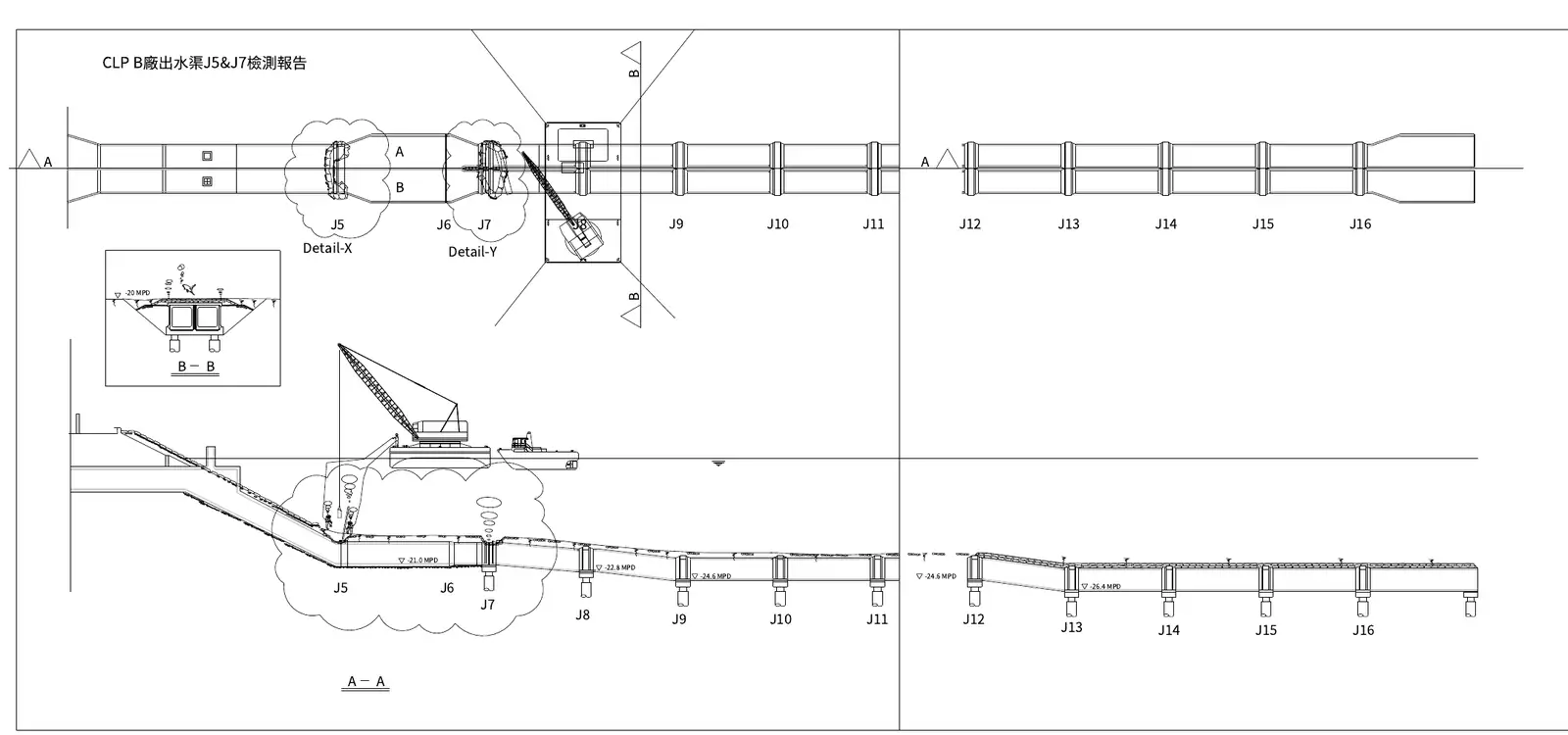
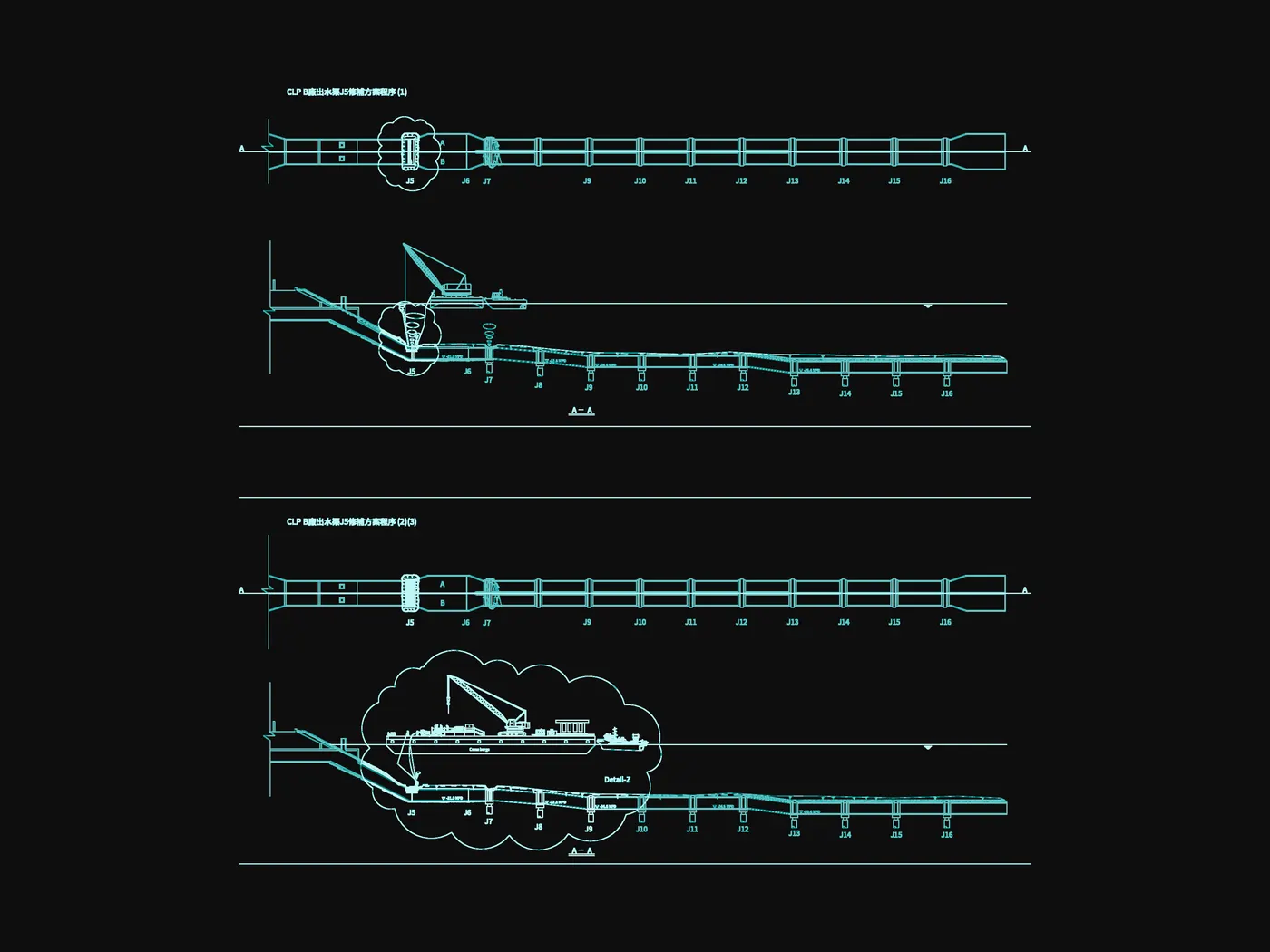
In November 2010 bubbles were seen rising from the seabed over one outfall joint at about −16 m. Four divers probed the cover and found a 100 mm open joint under 0.3–2 m of rock and mud. The repair was planned around a single unit shutdown:
- Moor a work boat over the leak and airlift away about 36 m³ of cover.
- Fill the gaps at the culvert walls with grout bags.
- Lay a 3 × 15 × 0.3 m grout mattress over the joint.
- Let it cure so the unit can restart 24 hours later.
The same years included replacing the stop-gate guide rails at the A and B plant intakes and outfall, measured by divers and hot-dip galvanised, and a two-day CCTV survey of the A plant intake culvert with the pumps still running.
Drawings