Guangdong–Hainan 500 kV interconnector: protecting the submarine cables
Burying and protecting the 500 kV cables that link Hainan to the mainland grid: jetting them into the seabed at Xuwen, cutting through volcanic rock, and covering them with concrete slabs or grout bags at −35 m off Haikou.
- Year
- 2009
- Client
- China Southern Power Grid
- Location
- Qiongzhou Strait: Xuwen and Haikou
- Status
- Completed
- Category
- Underwater & marine
The Guangdong–Hainan interconnector carries power across the Qiongzhou Strait on three submarine cables. Near both shores the cables needed extra protection from anchors and fishing gear.
Xuwen side
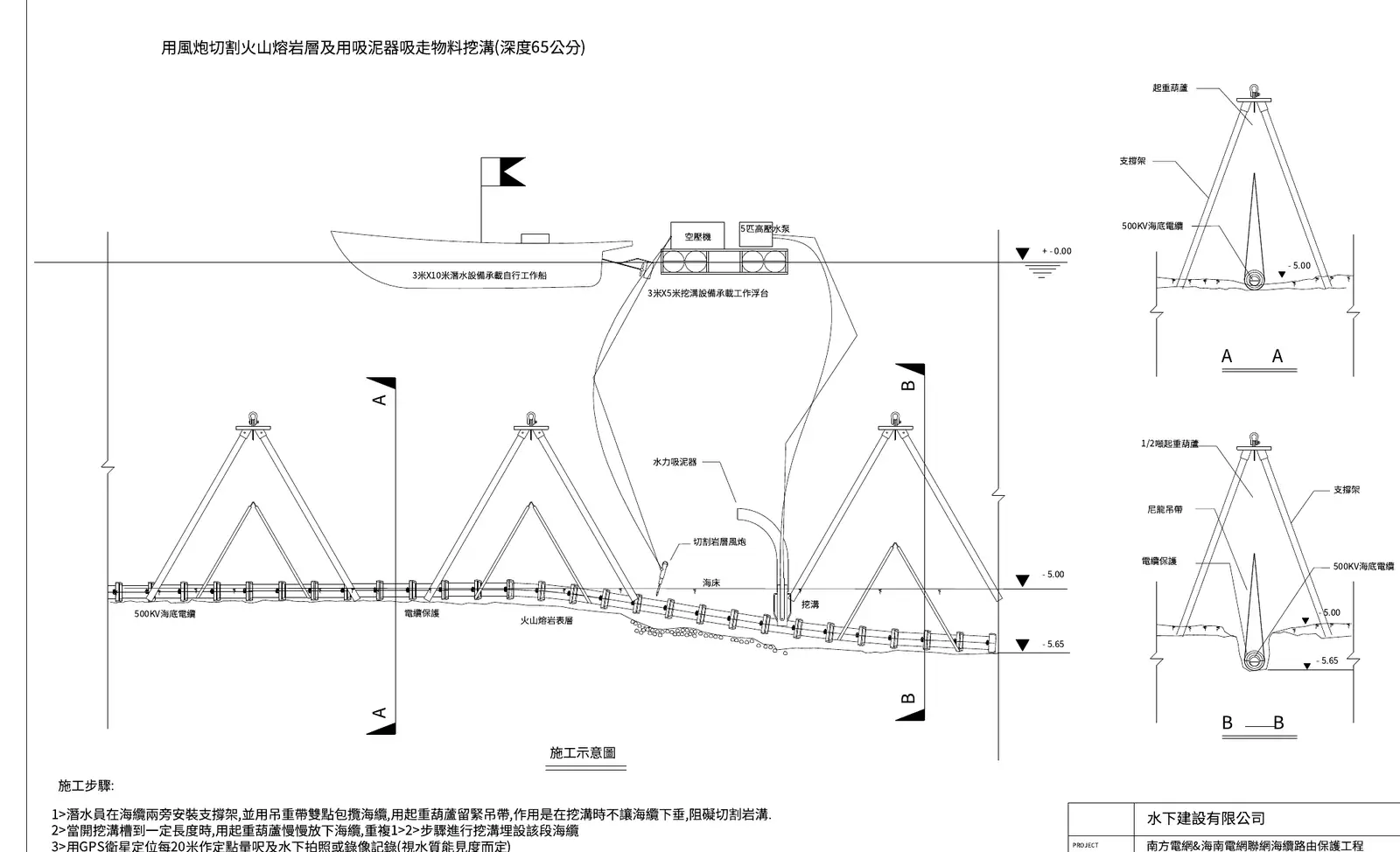
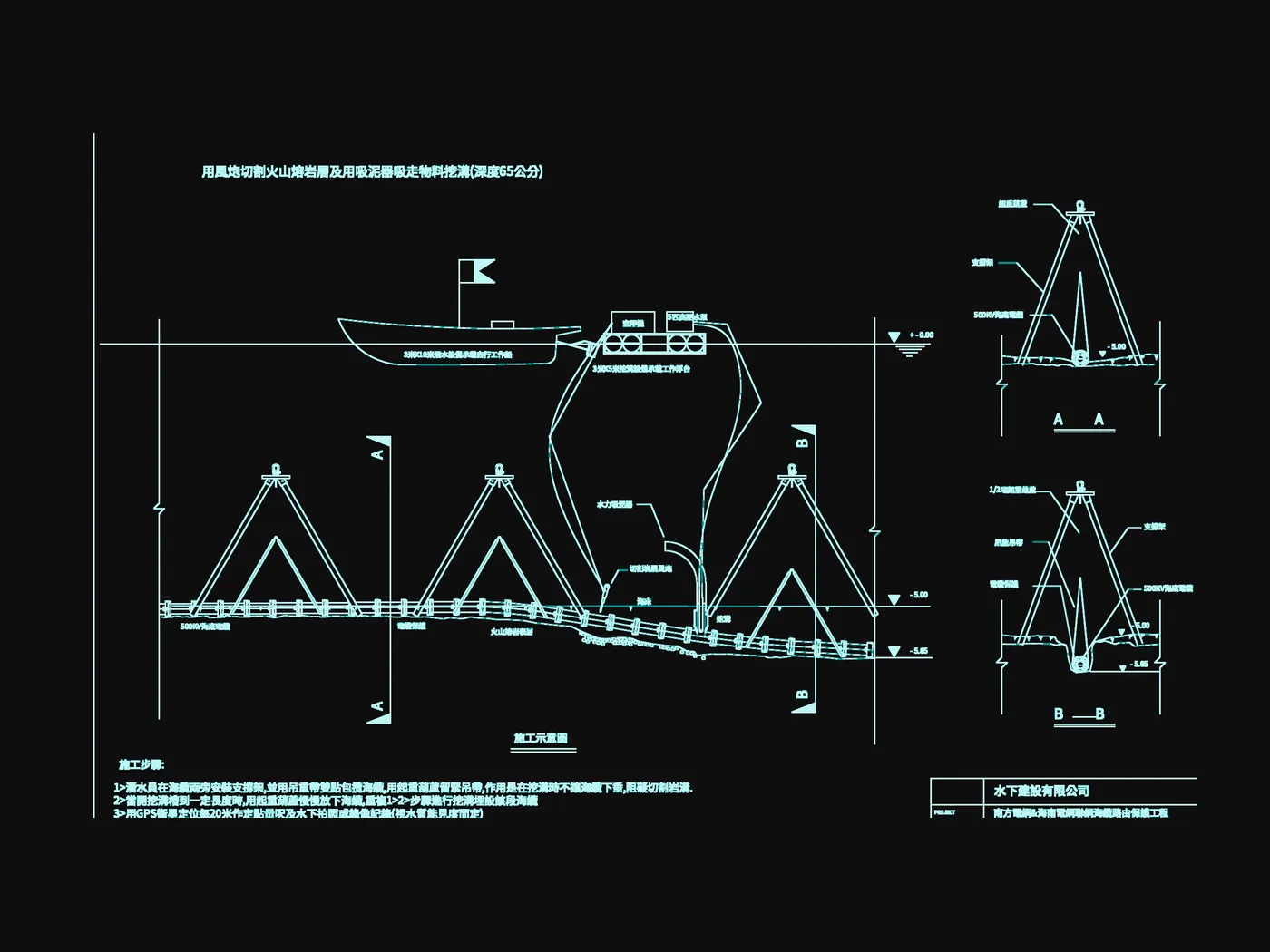
Close to the Guangdong shore the water is shallow and crowded with fishing stakes. Divers used jetting and suction tools to lower the cables 65 cm into the clay. Where they met volcanic rock, the cable was lifted clear on support frames with chain blocks while divers cut a trench through the rock with pneumatic breakers, then the cable was lowered back in.
The team worked from a 3 × 5 m float built on sixteen 550 mm drums, alongside a diving boat tied to the stakes and anchored 100 m from the cable marker buoys. Positions and photos were taken every 20 m. A 100 m trial trench came first.
Haikou side
Off Haikou the cables lie at about −35 m, too deep and too hard for jetting. We drew two ways to cover them:
- Cement sandbags, then 3.1 × 4 × 0.25 m concrete slabs of about 15 tonnes each, placed by a 30-tonne crane barge on the centreline set by divers.
- 2.5 × 5 × 0.3 m geotextile grout bags of about 11 tonnes, filled on deck and lowered into place by divers.
The two options were compared for anchor resistance and for how fast they could be laid.
Drawings